
The construction that looks most luxurious on day one may be the least repairable after an eye-level edge chips or a central panel must come out. The owner’s objective is therefore not simply “wood paneling,” but a grain-rich elevation that permits service access and isolated replacement without dismantling the room.
Which wall-panel material is most repairable in a formal living room?
For a dry, conditioned North American residence, veneered engineered-core panels offer the best balance of continuous grain and replaceable modules. Solid timber suits narrow details; painted MDF suits crisp, renewable color.
| Construction | Broad-field stability | Edge damage | Finish renewal | Single-panel replacement | Matching risk | Moisture exposure | Relative cost |
|---|---|---|---|---|---|---|---|
| Veneered engineered core | Good with balanced construction | Protected by lipping | Usually full-panel work | Good if mechanically fixed | High without retained veneer | Sensitive | Medium-high |
| Narrow solid-timber assembly | Width-dependent | Generally robust | Can be sanded or recoated | Moderate | Species, grain and age | Moves with moisture | High |
| Painted MDF | Good when kept dry | Edges are vulnerable | Repaintable | Good | Lower with finish records | Poor if wetted | Low-medium |
Veneer matching must be specified as part of the elevation
Veneer is a thin decorative wood layer bonded to a core, the structural panel beneath it. A balancing back is the rear layer selected to counter unequal stresses. Book matching opens adjacent leaves like book pages; slip matching places consecutive leaves without turning them. Sequence matching preserves leaf order across panels, while blueprint matching allocates those leaves across the complete elevation.
Retain labeled leaves from the same flitch, meaning the consecutive veneers sliced from one log. Wood exchanges moisture with surrounding air, according to the USDA Forest Products Laboratory, so veneer does not make poor environmental control irrelevant.
Painted MDF trades visible grain for finish continuity
MDF, or medium-density fiberboard, is a resin-bonded cellulosic-fibre panel with a smooth, uniform machining surface. The Composite Panel Association describes general MDF attributes, but that description does not certify a selected product. Specify grade, thickness, sealed edges, coating approval and applicable emissions documentation. Exclude unresolved leaks and repeated wet cleaning.
Solid timber moves with humidity, while panel products require their own stability checks
Broad solid-timber panels carry the greatest seasonal movement risk, but an engineered panel still depends on its core, balancing layer, storage and support.
How much movement should the joinery workshop calculate for solid timber?
- Species and cut: identify the timber and grain orientation. Rift-sawn boards show growth rings oblique to the face; quarter-sawn boards place them nearer perpendicular.
- Occupied conditions: record heating, cooling, humidification and the expected humidity range. Equilibrium moisture content is the level wood approaches under surrounding temperature and humidity.
- Fabrication moisture: measure the material rather than relying on a supplier description. Check species-specific USDA data rather than transferring values between species.
- Movement detail: calculate from species, finished width, grain direction, initial moisture content and anticipated service conditions. Use floating panels, shadow gaps, slotted fixings or frame-and-panel construction to accommodate the result.
Balanced panels still require fabrication checks
Confirm the core, adhesive, pressing process, support, storage, module size and flatness tolerance. Protective coatings retard moisture exchange but do not prevent movement. The next test is whether the panel perimeter permits removal.
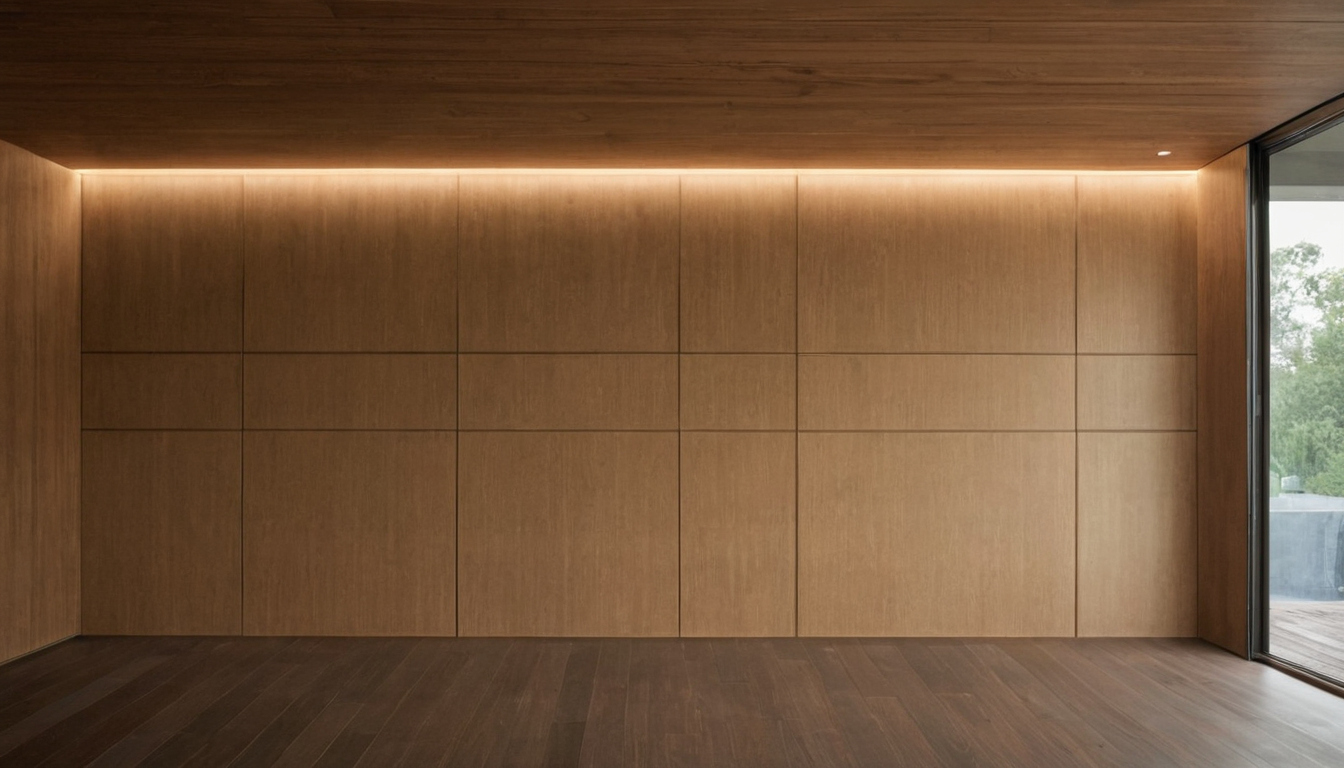
Solid timber moves with humidity, while panel products require their own stability checks shown with finish, fixture, and clearance relationships visible.
Panel edges, joints, and fixings determine whether one damaged section can be replaced
Expressed shadow gaps, separate trims and concealed mechanical fixings are more serviceable than filled seams, continuous mouldings or panels bonded across service zones.
Removal-design checklist
- Draw every module, corner, socket, grille, trim and access point.
- Specify each shadow gap, meaning a deliberate recessed joint, by width, depth, backing color and tolerance.
- Define solid lipping, a timber strip protecting a panel edge, by species, cut, thickness and attachment.
- Record panel weight, fixing capacity, removal direction and tool clearance.
- Mock up removal of the central module without chipping its neighbors.
Qualified project professionals must approve fixing capacity, electrical access, fire stopping and code compliance.
The specified finish determines whether wall paneling can be touched in, recoated, or only replaced
The finish schedule must state whether damage receives a local touch-up, full-panel recoating, shop refinishing or replacement. “Clear lacquer” is not a sufficient specification.
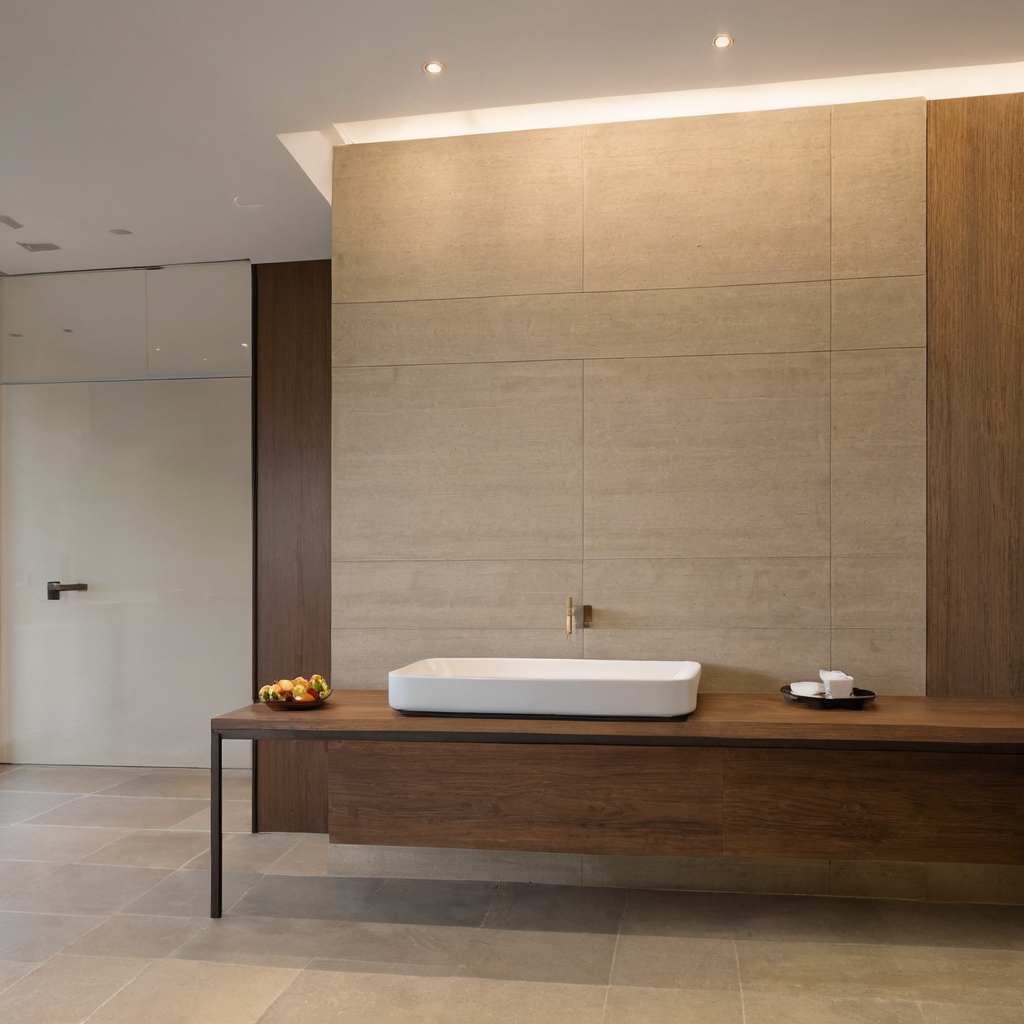
The specified finish determines whether wall paneling can be touched in, recoated, or only replaced shown as a planning reference for layout, scale, and material decisions.
Painted MDF requires a reproducible coating schedule
Record manufacturer, product line, color, sheen, primer, reducer, application method and any catalyst ratio. A catalyzed varnish cures through a specified catalyst, so its mixing, substrate preparation, curing and recoating instructions must be retained. Approve repairs on a test panel before treating installed work.
Clear veneer has more matching variables
Record species, flitch, leaf sequence, cut, match, stain and clear coat. Retain a control sample approved under daytime and evening lighting. Grain, stain, sheen and light exposure can make a technically sound patch conspicuous, so a professional finisher should classify damage before work begins.
Access panels must look intentional and remain operable after the room is furnished
Map valves, junction boxes, controls, speakers and maintainable equipment before fixing the architectural grid. Require coordinated services drawings, repeatable fixings, opening direction and tool clearance.
Test the furniture layout and plan the living room furniture clearances so a sofa, console or curtain cannot block removal. Handover stock should include sequenced veneer, suitable substrates, paint records, lippings, trims and critical hardware, all keyed to as-built drawings.
Wall-panel quotations should price initial installation and one-panel replacement separately
Compare installed cost plus future intervention, not price per square foot alone. Obtain quotations for an identical elevation, finish, access requirement and hypothetical replacement of one damaged central panel.
Each quotation should itemize design, samples, core, veneer matching, edges, finish, subframe, fixings, access panels, stock, delivery and installation. Price replacement both with and without retained material, including survey, remobilization, room protection and disturbance to neighboring panels. This extends the same assessment of repair and replacement risk in living room procurement to fixed joinery.
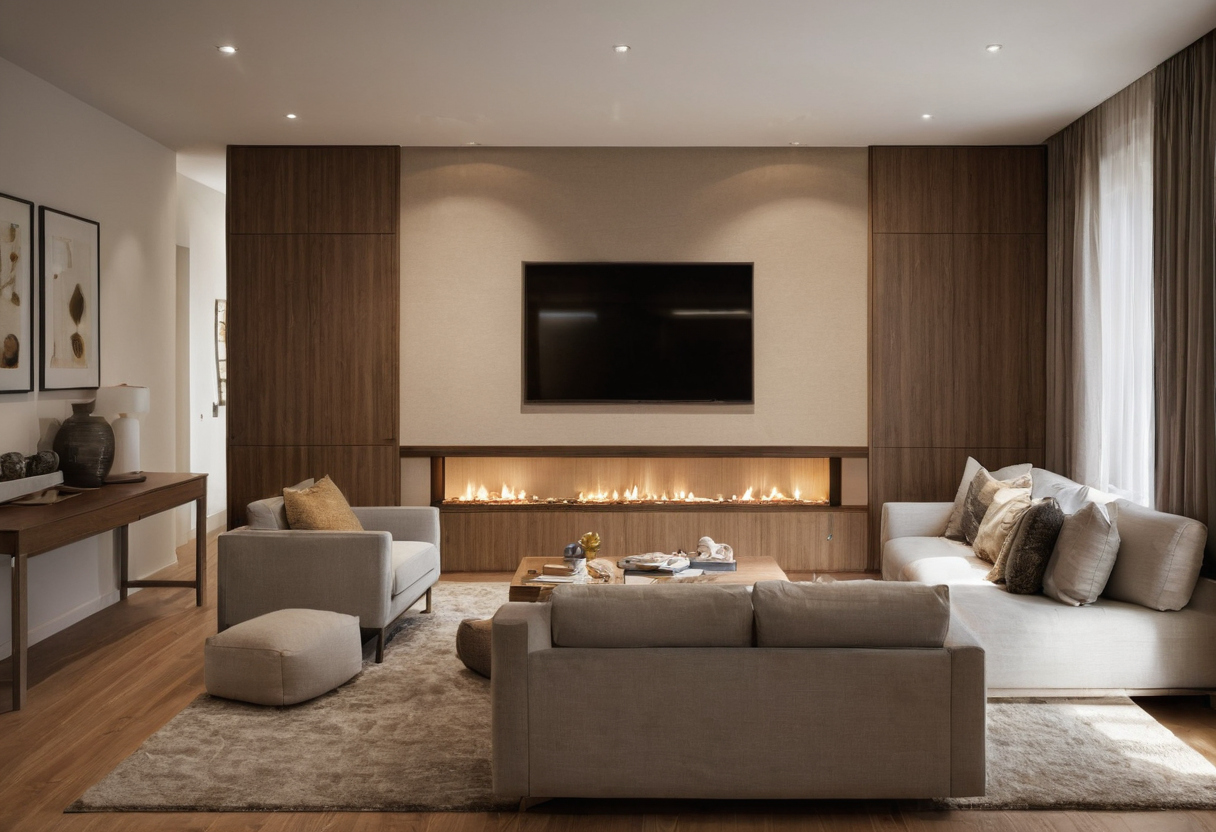
Wall-panel quotations should price initial installation and one-panel replacement separately shown with floor, wall, and fixture relationships visible.
A repairable living room paneling brief must specify materials, modules, finish records, and handover stock
A client brief should define a maintainable assembly rather than a visual style. Record the core, face material, matching method, edge construction, movement strategy, fixings, access sequence, coating schedule, environmental conditions, mock-ups and replacement price.
What should be decided before tender?
- Set panel rhythm, depth, appearance, sheen, lighting and maximum projection.
- Rank natural grain, budget, movement control, impact repair, recoating and access.
- Approve the veneer flitch, technical mock-up, control sample, shop drawings and first completed bay.
What must be inspected before acceptance?
Inspect alignment, reveals, edges, finish, rattles, fixing security and access-panel removal under final lighting. Confirm that wet trades are complete and environmental records meet the agreed installation conditions. The EPA identifies paints, varnishes and building materials as indoor VOC sources, so retain coating information, care requirements and ventilation instructions.
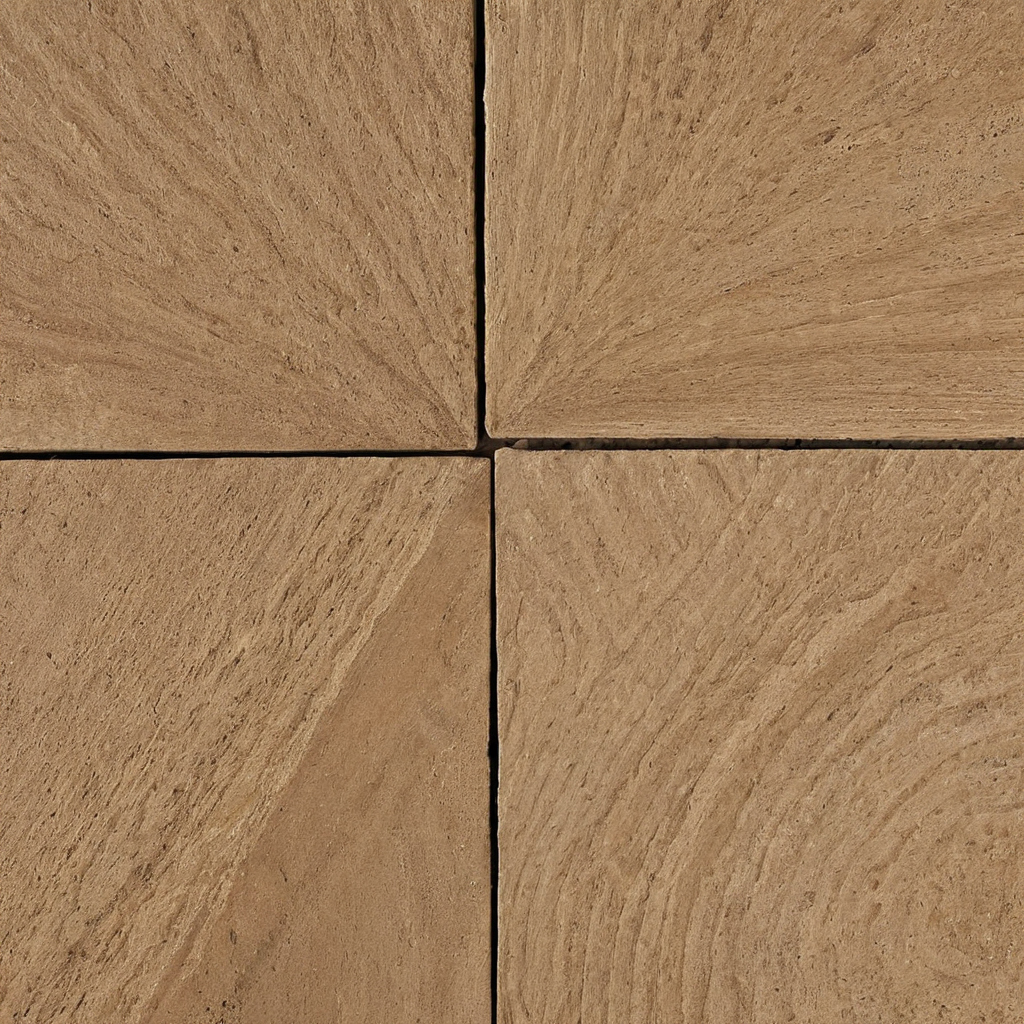
A repairable living room paneling brief must specify materials, modules, finish records, and handover stock shown as an editorial reference for proportion and finish coordination.
Accept handover only with an as-built panel map, removal instructions, service sequence, warranties, control samples and a signed attic-stock inventory. Tender the system that can be maintained, not merely the elevation first admired.
Frequently asked questions
Which is better for formal living room wall paneling: MDF or wood veneer?
Veneered engineered-core panels suit grain-rich elevations. Painted MDF is preferable where crisp machining, color continuity and straightforward repainting take priority.
Is MDF suitable for a dry, climate-controlled living room?
Yes, provided the specified grade, edge sealing, coating system, emissions documentation and fixing design suit the application. MDF should not conceal unresolved damp.
What are the repair disadvantages of veneer panels?
Replacement veneer may differ in grain, color and light exposure. Retained sequenced leaves and removable modules reduce that risk.
Does solid timber always crack with seasonal humidity?
No. Solid timber predictably shrinks and swells as moisture changes, but suitable moisture content, component width and movement detailing can control visible consequences.
What spare material should the client retain?
Retain labeled veneer leaves, compatible substrates, finish schedules, control samples, lippings, trims, clips and proprietary hardware, together with storage and removal instructions.