
The delivery crew unloads the sofa and loveseat, but the matching chair is damaged. Does one failed component now compromise the entire purchase, or can the room function while that piece is repaired, replaced, or substituted? The answer depends less on matching style than on specifications, delivery terms, and repair access.
Is a matched livingroom set or mixed furniture the lower-risk purchase?
A matched livingroom set is usually lower risk when finish consistency, coordinated delivery, and one-point warranty administration matter most. Mixed furniture is safer when stronger individual components, phased spending, specialized comfort, or easier replacement matter more.
| Decision factor | Matched | Mixed | Hybrid |
|---|---|---|---|
| Durability control | Shared specification | Piece-specific | Focused on key seating |
| Coordination | Lowest effort | More vendor control | Moderate |
| Warranty administration | Often consolidated | Multiple contacts | Split |
| Replacement exposure | Higher if discontinued | Failure stays isolated | Limited |
| Customization | Restricted | Highest | Selective |
| Budget phasing | Usually front-loaded | Flexible | Flexible |
Choose a matched living room set when coordination risk exceeds component risk
- Select matched pieces for a low-use formal room, fixed move-in date, remote purchase, restricted receiving window, or project without the capacity to manage several vendors.
- Confirm in writing that every component shares the stated finish program, ordering channel, delivery scope, and warranty administrator.
- For occupied rooms, the U.S. Environmental Protection Agency identifies furnishings as possible indoor VOC sources and recommends increased ventilation when using VOC-emitting products indoors.
- Do not accept furniture that has been stored in visibly damp conditions. The U.S. Environmental Protection Agency advises fixing wet or damp spots promptly as part of residential mold prevention.
Rooms containing valuable art or collections may also need stricter documentation and environmental controls. The National Park Service Museum Handbook provides a conservative reference for preservation, documentation, access, and use, although it is not a residential decorating standard.
Choose mixed living room furniture when component quality matters more than uniformity
Mixed purchasing suits everyday family rooms, homes with children or pets, irregular layouts, short-term furnished properties, and long ownership periods. It allows washable upholstery, replaceable cushion cores, suitable seat depth, and a harder-wearing table finish to be selected independently.
Compare prices only at equivalent seating capacity, upholstery tier, delivery service, and tax basis. Contract remedies and consumer protections depend on the delivery jurisdiction and terms current on the order date. The next test is construction: durability depends on specifications, not on whether the pieces match.
Durability depends on furniture specifications, not whether the pieces match
Neither a coordinated set nor mixed furniture is inherently more durable. Service life depends on frame construction, joinery, suspension, cushion composition, upholstery performance, finish resistance, and maintenance access, compared across similar price tiers, household exposure, intended use, and test methods.
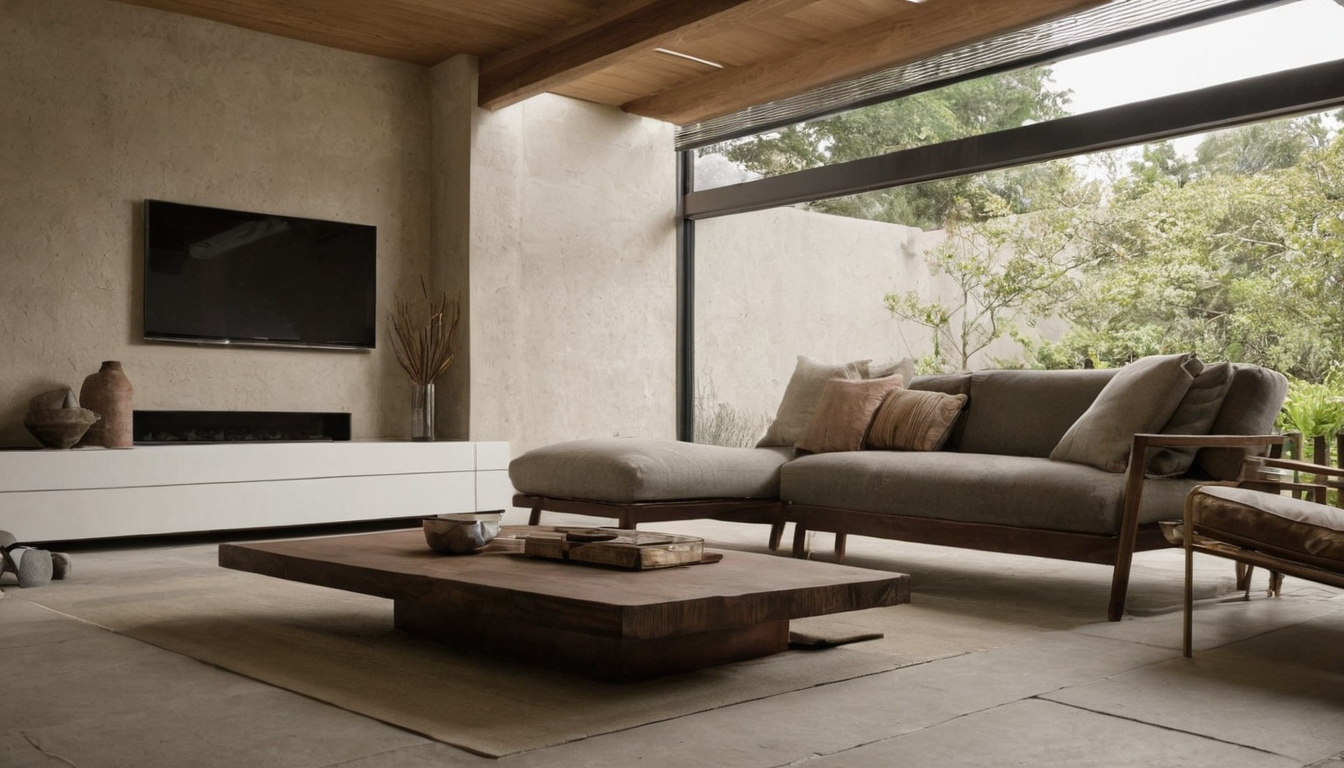
Durability depends on furniture specifications, not whether the pieces match shown with finish, fixture, and clearance relationships visible.
| Specification | Evidence to request | Durability implication |
|---|---|---|
| Frame and joinery | Material, joint type, corner blocking, and published load testing | Named construction permits a meaningful comparison; “hardwood frame” alone does not. |
| Suspension | Spring, webbing, or other support system and attachment method | Serviceable attachments reduce the consequences of a localized failure. |
| Cushions | Core composition, foam density with units, wrap, reversibility, zips, and replacement availability | Accessible cushions can be rotated, cleaned, rebuilt, or replaced separately. |
| Upholstery | Fiber content, backing, finish, test method, result, and intended end use | A result has little value without its method and use condition. |
| Exposed finish | Substrate, veneer or solid construction, coating system, and care limits | Resistance to moisture, heat, cleaners, sunlight, and scratching varies by finish. |
| Replaceable parts | Availability of covers, cores, feet, glides, hardware, and mechanisms | Replaceable components can prevent one defect from retiring the whole piece. |
Which sofa and armchair construction details predict serviceability?
A sofa or armchair specification should identify the frame material rather than rely on broad labels such as “wood construction.” Ask how rails and corners are joined, whether stressed corners are blocked, how the suspension attaches, and whether damaged webbing or springs can be reached without dismantling permanent upholstery.
Cushion access matters just as much. Zip-accessed, reversible seat cushions allow wear rotation and core replacement; fixed cushions limit both. For legs and feet, confirm whether attachments use removable hardware and whether matching glides remain available. These details can make a mixed arm chair living room selection easier to maintain than visually coordinated but undocumented seating.
How should upholstery abrasion ratings be compared?
Upholstery results are comparable only when fabrics use the same named test method and report equivalent conditions. Results obtained through different abrasion methods should not be converted into one shared durability ranking. Record the method, result, fiber content, backing, applied finish, and declared end use for every fabric.
The ACT physical-properties guidance for indoor woven upholstery specifies a Class 3 minimum pilling result under either ASTM D3511 or ASTM D4970, a 50-pound minimum breaking strength under ASTM D5034, and a 25-pound minimum seam-slippage result under ASTM D4034, each under the stated conditions.
ACT also specifies a 35-pound minimum breaking strength for woven fabrics used on wrapped panels and upholstered walls. For drapery fabrics weighing more than 6 ounces per square yard, its guidance provides a 25-pound minimum seam-slippage requirement under the identified method and modification. These panel and drapery figures should not be substituted for upholstery requirements.
ACT cautions that laboratory pilling tests cannot predict field performance because maintenance, misuse, and environment affect results. Abrasion, pilling, breaking strength, and seam slippage answer different questions, so a large number from one test cannot compensate for missing information elsewhere.
Which table and exposed-wood finishes tolerate everyday living room use?
Table durability depends on the complete surface system: substrate, veneer where applicable, stain, sealer, topcoat, edge treatment, and repair instructions. A delicate lacquer may suit a low-contact room with coasters, while a family room needs a finish whose moisture, heat, and cleaner limits match daily use.
Natural stone also requires controlled care. The Natural Stone Institute recommends neutral cleaner, stone soap, or mild dishwashing detergent with warm water, and warns that abrasive scouring powders or creams can scratch stone. Once specifications identify the durable candidates, delivery sequencing becomes the next risk: mixed furniture offers flexibility, but every additional supplier creates another dependency.
Mixed living room furniture offers more procurement flexibility but creates more delivery dependencies
Mixed living room furniture lets buyers substitute delayed pieces and phase spending, but each vendor adds another production schedule, freight policy, receiving window, and return process. A matched set reduces coordination only when every component is available together and can ship without the slowest item holding the order.
How should buyers compare furniture lead times before placing deposits?
A quoted “lead time” is not a delivery date. Ask the seller to separate production, long-distance transit, local receiving and inspection, delivery scheduling, and installation. Compare the complete sequence with renovation completion, elevator reservations, move-in dates, and the point at which someone can inspect the furniture.
- Confirm stock status in writing: “In stock,” “allocated,” and “available to order” can describe different levels of certainty. Request the item number, quantity, finish, upholstery, and warehouse location.
- Record the production basis: Distinguish stocked, made-to-order, and custom pieces, then document the production start condition and estimated completion range.
- Map delivery constraints: Identify the freight method, restricted building hours, elevator requirements, remote-location surcharges, access measurements, and whether a renovation site can accept or store goods.
- Read the financial terms: Check deposits, cancellation rights, substitutions, change orders, split shipments, storage, redelivery, and refunds before payment.
Mixed living room furnishing ideas permit a temporary chair or side table to fill a gap. The trade-off is administrative: several smaller deliveries require more inspections, access coordination, and claim deadlines than one consolidated installation.
What happens if one piece in a matched furniture set arrives damaged?
A damaged component can compromise the convenience of a complete livingroom set if the seller cannot release the remaining pieces, replace only the affected item, or reproduce the original finish. Before delivery, confirm:
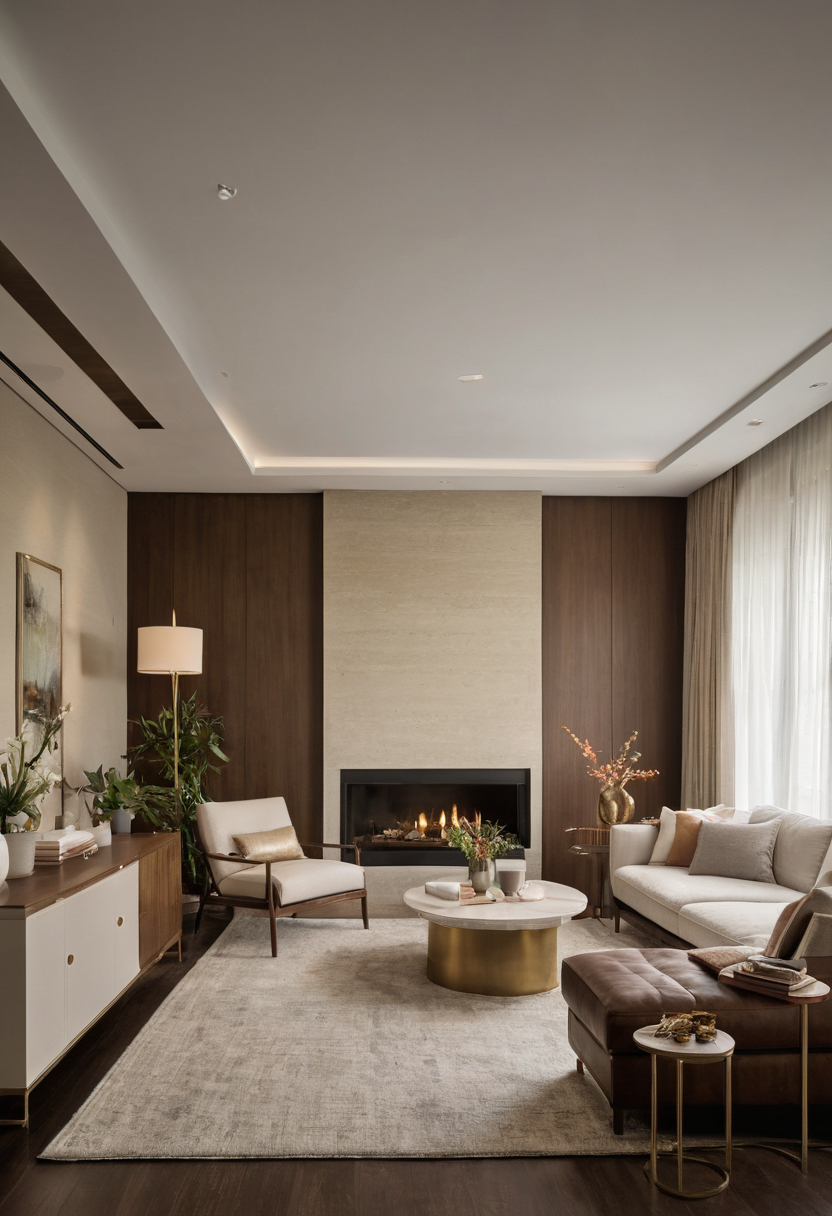
Mixed living room furniture offers more procurement flexibility but creates more delivery dependencies shown with finish, fixture, and clearance relationships visible.
- Whether components may ship and be accepted independently
- When damage must be photographed and reported
- Whether the remedy is field repair, component replacement, or full-set return
- Who pays for collection, storage, reinstallation, and redelivery
- Whether replacement upholstery or wood finish may vary from the original batch
Delivery terms reveal the immediate disruption, but long-term ownership depends on a harder question: can the failed component be repaired without replacing the furniture collection?
Repairability should be checked before buying any living room furniture collection
Repairability matters most when living room furniture will be used daily or kept beyond its warranty. Buyers should confirm whether cushion inserts, covers, legs, hardware, and mechanisms can be ordered separately. A replaceable component can preserve the room; a discontinued proprietary part can force premature replacement of an otherwise sound set.
Can the sofa or armchair be repaired without replacing the full set?
Inspect the furniture specification and ask the dealer to document the route for obtaining parts. A general assurance that an item is “serviceable” does not establish who performs the work, which components qualify, or how long parts remain available.
- Check whether seat and back cushions have zippered covers and separately replaceable inserts.
- Confirm whether legs, glides, connectors, zippers, and exposed hardware use removable fixings rather than permanent attachment.
- Ask whether an upholsterer can reach the springs, webbing, seams, and frame without destroying finished upholstery.
- For reclining, swivel, or powered seating, identify the mechanism manufacturer and establish whether motors, controls, cables, and bases are sold independently.
- Separate warranty coverage for structural defects from exclusions for upholstery wear, finish damage, transport damage, misuse, and normal material variation.
Risk scenario: One powered chair in a matched livingroom set develops a failed control after the model is discontinued. If the control is proprietary and unavailable, the chair may become unusable even though its frame and upholstery remain sound. A mixed or hybrid purchase limits that failure to one replaceable piece.
Will replacement upholstery match the original dye lot and finish?
Replacement material may carry the same product name without producing an invisible repair. Textile dye lots vary, existing fabric fades through light exposure and cleaning, leather panels develop individual color and grain, and stained timber changes through exposure and wear.
Before ordering, request written answers to these repairability checks:
- Can spare fabric or leather be purchased, and does a minimum order apply?
- Does the maker archive upholstery, finish formulas, touch-up kits, or physical samples?
- May an independent workroom use customer-supplied material without affecting remaining warranty coverage?
- Can one panel or cushion cover be replaced, or must the complete chair or sofa be reupholstered?
Once repair exposure is understood, mixed furniture becomes a visual-planning problem: coherence comes from controlling proportions and repeated details, not from buying identical pieces.
Mixed living room furniture looks coherent when proportions and repeated details are controlled
Mixed furniture does not require matching silhouettes, but the room still needs measurable relationships. Visual balance comes from compatible seat heights, arm scales, table heights, material repetition, and controlled contrast. In compact or open-plan rooms, resolve door swings, circulation paths, windows, fireplace views, television angles, and the adjacent dining route before choosing an accent chair for color alone.
How can an arm chair in the living room relate to a different sofa?
An arm chair living room pairing works when both seats support the intended activity and share one or two visible details. Compare seat height, usable seat depth, arm height, back height, overall width, and visual weight using manufacturer drawings rather than product photographs.
Example one: A sofa with a 45 cm seat height and 62 cm seat depth can pair comfortably for conversation with an armchair measuring 44 cm high and 57 cm deep. The chair may have a curved back while the sofa remains rectilinear; repeating a dark timber leg finish and warm upholstery undertone provides enough continuity.
Example two: A compact television room might combine a 43 cm-high, deeper sofa with a 46 cm-high, shallower reading chair. The difference can support distinct sitting positions, but the chair should not obstruct the screen or project into the route from the doorway. Buyers with mobility needs should test seat firmness, arm support, and standing comfort rather than relying on matching dimensions.
Which dimensions should match, and which can deliberately differ?
Functional relationships deserve tighter control than decorative ones. Seat heights should be close enough for comfortable conversation, while side-table tops should remain reachable from the specific seat. Coffee-table size and position must respond to actual knee room, walking routes, recliner movement, and seating depth. Approximate design conventions are starting points, not universal clearance requirements.
- Coordinate: Seat ergonomics, table reach, circulation, arm scale, and sightlines.
- Repeat selectively: One metal finish, timber tone, upholstery undertone, piping color, or leg profile.
- Vary deliberately: Back height, table shape, fabric texture, and silhouette.
- Check in plan: Floor area, door arcs, fireplace clearance, windows, television position, and dining access.
These living room furniture ideas work only after the relationships are checked against the actual room. Confirm sofa, armchair, and coffee table spacing against the room survey. The final choice between matched, mixed, and hybrid furniture should then pass a written pre-purchase risk check.
Use a pre-purchase risk check to choose the right living room furnishing strategy
The final choice should follow a written check of specifications, delivery commitments, warranty coverage, repair access, and replacement exposure. A matched livingroom set favors coordination and predictable installation. Mixed furniture favors component performance and substitution. A hybrid plan often works when the sofa is fixed first and supporting pieces remain flexible.
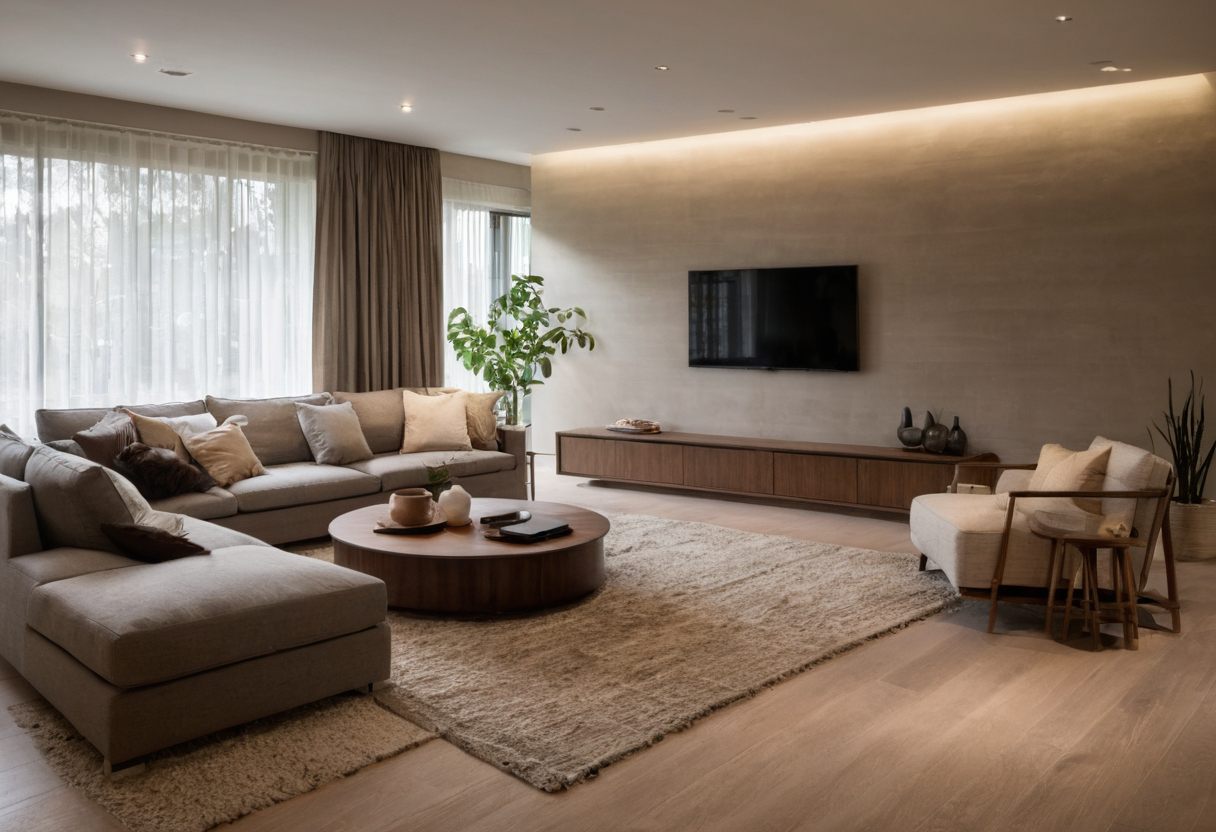
Use a pre-purchase risk check to choose the right living room furnishing strategy shown with floor, wall, and fixture relationships visible.
What should be confirmed in writing before ordering living room furniture?
Convert showroom discussions and online descriptions into an order record covering:
- Measurements: Product dimensions, sofa orientation, room clearances, doorways, lifts, stairs, and turning space.
- Product identity: Model numbers, quantities, fabric or leather codes, finish codes, approved samples, and cushion specifications.
- Commercial terms: Itemized quotes, deposits, tax basis, return conditions, storage charges, and cancellation restrictions.
- Delivery: Current lead-time status, delivery scope, access requirements, inspection procedure, and damage-reporting process.
- Ownership: Care instructions, warranty administrator, exclusions, replacement-part contact, and confirmation of whether published specifications may change without notice.
Retain order confirmations, approved finish samples, fabric labels, care sheets, delivery photographs, inspection notes, and warranty documents. These records help distinguish an ordering error from acceptable material variation or damage.
When is a hybrid furniture plan the most practical answer?
A hybrid strategy coordinates major seating without making every table and chair dependent on one collection. Examples include a matched sofa and loveseat with independent tables, or one durable anchor sofa with separately sourced armchairs.
- Fixed installation date: Choose matched pieces only if every item has compatible written delivery status.
- High-use household: Prioritize replaceable cushion inserts, removable covers, repair access, and durable finishes over uniformity.
- Phased budget: Secure the primary sofa, then add substitutable chairs and tables as funds and stock permit.
For later purchases, record sofa dimensions, seat height, arm height, upholstery references, and finish samples. Choose matched, mixed, or hybrid furniture only after the written risk check shows which option remains workable if one component is delayed, damaged, or discontinued.
7. Frequently asked questions
The practical answers depend on equivalent product specifications and written sales terms, not on the matched or mixed label alone.

7. Frequently asked questions shown with finish, fixture, and clearance relationships visible.
Is it cheaper to buy a complete livingroom set or mix furniture from different brands?
A complete set may have a lower package price, while mixed furniture allows spending to be phased and expensive features to be reserved for high-use pieces. Compare equivalent seating capacity, upholstery tier, delivery scope, tax basis, and expected ownership period before deciding which option costs less.
Can a matched living room set be replaced one piece at a time if a sofa or chair is damaged?
Separate replacement is possible only if the component remains available and the seller permits an individual order. Confirm model availability, finish variation, upholstery batch differences, delivery charges, and whether the warranty remedy applies to one component or the complete purchase.
How can an arm chair in the living room coordinate with a sofa that does not match?
Coordinate functional dimensions first, including seat height, depth, arm support, table reach, and circulation. Repeat one or two details such as a timber tone, metal finish, upholstery undertone, piping color, or leg profile while allowing the silhouette and texture to differ.